Medical Device Manufacturer Catalog No.8472
OROSOL® can produce medical device-Low-temperature Plasma Surgical Systems & Disposable Electrodes.
Item Name: OROSOL® Plasma Surgical Solutions.
Brand: OROSOL®
OROSOL® can produce all kinds of medical devices.
If you are interested in this product, please feel free to contact us: RoboticWorkCell@outlook.com
Product Description
Medical Device Manufacturer Catalog No.8472
General View of OROSOL® Manufacturer No.8472:
OROSOL Machinery and Equipment Manufacturing LLP is headquartered in China. Manufacturer No.8472 was established in 2002 and is a National High-tech Enterprise and a National Specialized and Sophisticated “Little Giant” Enterprise. OROSOL has passed ISO 13485 quality system certification, with over 190 employees and a registered capital of 42.28 million CNY. The company holds 126 patents and has a production facility with Class 100,000 cleanrooms, producing 500,000 units annually. OROSOL is a domestic leader in plasma medical technology, with its ear, nose, and throat (ENT) products holding over 50% of the domestic market share.
Medical Device Manufacturer Catalog No.8472
| Product Name & Model | Parameters & Specifications | Features & Applications |
|---|---|---|
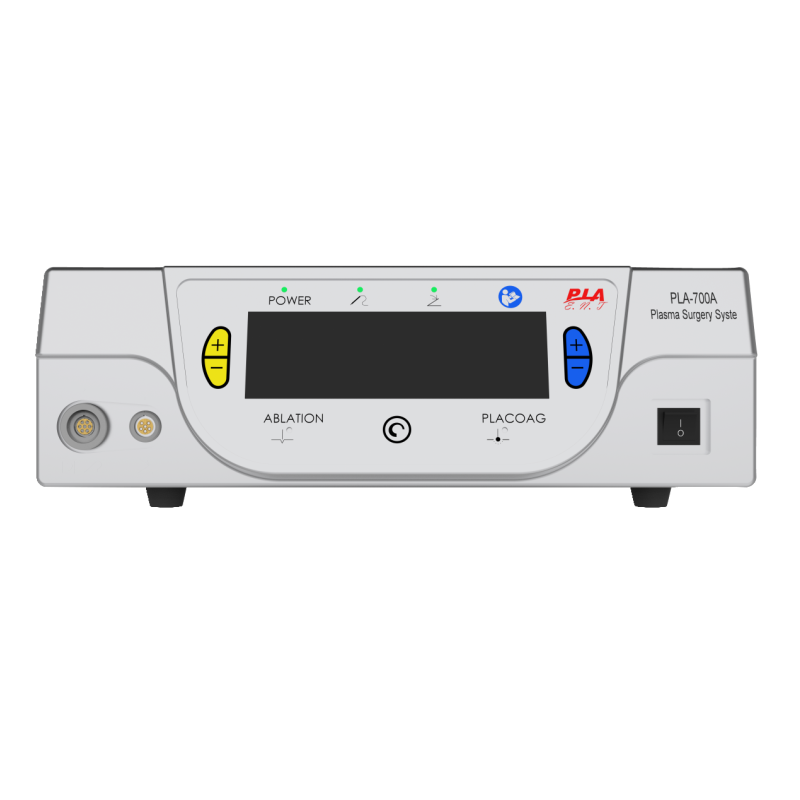
| OS-Plasma System Generator PLA-700 | 1. Bipolar plasma generator operating at a stated excitation frequency. 2. Two working modes with ten adjustable levels each. 3. Impedance detection with automatic energy regulation. 4. Stated output power and total consumption. 5. Timed cycles with a digital display. 6. Recognition of probe type and probe life. 7. Foot switch and sealed membrane panel. |
1. Registration: a medical device registration is held for this product. 2. A conductive saline layer is what carries the discharge, so the effect is a low temperature vaporisation layer rather than the charring produced by a conventional electrosurgical arc. 3. Impedance detection adapts the output as tissue changes, which is what keeps the ablation depth close to the setting instead of running away in soft tissue. 4. Probe recognition prevents a probe being driven beyond its rated energy, which is the failure mode that destroys the electrode and injures tissue. 5. Used for ablation, cutting and haemostasis in ENT, orthopaedic and urological procedures. |
| OS-Plasma System Generator Compact PLA-600 | 1. Compact generator with the same probe interface. 2. Stated frequency and output range. 3. Two working modes with adjustable levels. 4. Impedance display. 5. Foot switch control. 6. Stated weight and footprint. 7. Compatible probe list stated. |
1. Registration: a medical device registration is held for this product. 2. A compact chassis matters in an office based ENT procedure room, where the cart has to be moved between rooms and a full sized console is a barrier. 3. Sharing the probe interface with the larger console means one consumable stock serves both. 4. Lower maximum output suits soft tissue work and reduces the risk of an over delivery at the top of the range. 5. Used for office and day case plasma procedures. |
| OS-Plasma Probe Adenoid Ablation Curved | 1. Curved plasma probe with a stated shaft length. 2. Stated active tip length. 3. Integrated suction lumen. 4. Saline irrigation through the sheath. 5. Angled tip for nasopharyngeal access. 6. Single use sterile device. 7. Colour coded connector. |
1. Registration: a medical device registration is held for this product. 2. The curve follows the path behind the soft palate, which is the geometry that makes adenoid tissue reachable without hyperextending the neck. 3. Integrated suction removes the plume and keeps the tip visible, and in this location visibility is the main limitation. 4. A short active tip concentrates the discharge, which protects the adjacent Eustachian cushion. 5. Used for adenoidectomy and for adenoid remnant removal. |
| OS-Plasma Probe Tonsil Multifunctional | 1. Probe with an active tip and a return electrode in one shaft. 2. Stated shaft length and diameter. 3. Suction and irrigation channels. 4. Cutting, ablation and coagulation from one tip. 5. Single use sterile device. 6. Compatible with the stated console. 7. Stated maximum power setting. |
1. Registration: a medical device registration is held for this product. 2. Performing dissection, ablation and coagulation with one instrument removes the instrument exchanges that dominate operative time in this procedure. 3. The return electrode in the shaft confines current to the tip, which is why the effect does not spread to the tongue base. 4. Suction in the same shaft keeps blood away from the tip, and blood is what disperses the plasma layer and stops the effect. 5. Used for tonsillectomy and for tonsillotomy. |
| OS-Plasma Probe Turbinate Reduction | 1. Slender probe with a stated insertion diameter. 2. Stated active length for submucosal placement. 3. Coagulation mode emphasis. 4. Depth limited tip design. 5. Single use sterile packaging. 6. Compatible console stated. 7. Stated energy range. |
1. Registration: a medical device registration is held for this product. 2. Submucosal coagulation shrinks the turbinate while leaving the mucosal surface intact, which is what avoids the crusting that follows surface ablation. 3. A depth limited tip protects the underlying bone from unnecessary thermal load. 4. Slender diameter allows the probe to pass through a puncture rather than a incision. 5. Used for inferior turbinate reduction in nasal obstruction. |
| OS-Plasma Probe Laryngeal Micro | 1. Fine probe with a stated tip diameter. 2. Stated working length for a laryngoscope. 3. Angled tip options. 4. Low energy setting range. 5. Single use sterile device. 6. Compatible console stated. 7. Stated suction connection. |
1. Registration: a medical device registration is held for this product. 2. A fine tip with a low energy ceiling is what allows a lesion on the vocal fold to be removed without scarring the lamina propria, and that scarring changes the voice permanently. 3. Angled tips reach the anterior commissure where a straight instrument cannot align. 4. Suction prevents plume from obscuring a view that is already restricted by the laryngoscope. 5. Used for vocal cord polyp, nodule and papilloma removal. |
| OS-Plasma Probe Arthroscopic Knee | 1. Arthroscopic plasma probe with a stated shaft length. 2. Stated tip angle. 3. Integrated suction. 4. Saline compatible construction. 5. Bipolar return in the tip. 6. Single use sterile device. 7. Compatible console stated. |
1. Registration: a medical device registration is held for this product. 2. Working in saline is the natural environment of an arthroscopy, and a plasma device is therefore the only energy modality that does not need the field to be dried. 3. Low temperature operation limits thermal injury to cartilage, which has almost no capacity to repair. 4. Tip angle determines whether the posterior compartment can be reached through an anterior portal. 5. Used for chondroplasty, synovectomy and soft tissue debridement in the knee. |
| OS-Plasma Probe Spinal Disc Decompression | 1. Probe with a stated outer diameter for disc access. 2. Stated active length and bend radius. 3. Coagulation and ablation modes. 4. Depth marking on the shaft. 5. Single use sterile device. 6. Compatible console stated. 7. Stated maximum energy. |
1. Registration: a medical device registration is held for this product. 2. Controlled volume reduction of disc material relieves pressure on a nerve root while leaving the annulus intact, which is the basis of a percutaneous approach. 3. Depth marking is what keeps the active tip inside the disc and away from the endplate. 4. A defined bend radius allows the probe to be steered inside the disc space. 5. Used for percutaneous disc decompression in selected radicular pain. |
| OS-Plasma Probe Urology Resection | 1. Resection probe with a stated loop geometry. 2. Stated shaft length for a resectoscope. 3. Bipolar plasma cutting and coagulation. 4. Saline irrigation compatibility. 5. Single use sterile device. 6. Compatible console stated. 7. Stated electrode active area. |
1. Registration: a medical device registration is held for this product. 2. Bipolar operation in saline removes the risk of a dilutional electrolyte disturbance that monopolar resection in a non conductive irrigant carries. 3. Loop geometry determines the width of each pass and therefore the speed of the resection. 4. Saline irrigation is both the distension medium and the conductor, so flow has to be maintained for the effect to occur at all. 5. Used for transurethral resection and vaporisation of prostatic tissue. |
| OS-Plasma Probe Ophthalmic Fine | 1. Fine probe with a stated tip diameter. 2. Stated working length. 3. Low energy range with fine level steps. 4. Bipolar confined effect. 5. Single use sterile packaging. 6. Compatible console stated. 7. Stated cable length. |
1. Registration: a medical device registration is held for this product. 2. Confining the effect to a fraction of a millimetre is what allows haemostasis near the cornea or the lid margin without retraction of the surrounding tissue. 3. Fine level steps matter because the difference between an effective and an excessive setting is small at this scale. 4. A short working length keeps the hand steady close to the eye. 5. Used for oculoplastic and adnexal procedures. |
| OS-Controller Saline Flow Plasma | 1. Flow control unit with a stated delivery rate. 2. Saline bag spike and tubing set. 3. Drip chamber with a level sensor. 4. Stated alarm on empty bag. 5. Mounting bracket for a pole. 6. Single use tubing option. 7. Compatible console stated. |
1. Registration: a medical device registration is held for this product. 2. A steady saline film is what sustains the plasma layer, so a flow that drops mid procedure converts an ablation into a coagulation without any visible warning. 3. A level sensor turns that silent failure into an alarm. 4. Gravity or pump driven delivery is chosen by procedure length, since a long case needs a controlled rate rather than a drip count. 5. Used to maintain irrigation during plasma ablation. |
| OS-Electrode Portfolio Plasma Surgery | 1. Probe families for ENT, orthopaedic, urological and ophthalmic use. 2. Multiple shaft lengths and tip angles per family. 3. Integrated suction on the larger probes. 4. Colour coded connectors. 5. Single use sterile supply. 6. Compatibility list by console model. 7. Stated energy rating per probe. |
1. Registration: a medical device registration is held for this product. 2. A shared console with a specialty specific probe range is what allows one hospital to standardise on a single generator and still cover four departments. 3. Matching the probe to the anatomy rather than to the console is the selection rule, and the compatibility list is what enforces it. 4. Colour coding reduces the chance of opening a probe rated below the intended energy setting. 5. Used across ENT, arthroscopy, urology and ophthalmic surgery. |
Certificates of OROSOL® Medical Device Manufacturer 8472:
• ISO 13485:2016 Medical Devices Quality Management System
• NMPA Class III Medical Device Registration (multiple products)
• CE Marking (multiple products)
• Korea KGMP Certification
• GMP Medical Device Production Quality Management Standard
• National High-tech Enterprise
• National Specialized and Sophisticated “Little Giant” Enterprise
• National Technology Invention Second Prize (2019)
• National Industry Standard Drafting Unit (“Plasma Surgical Equipment” standard)
• 126 Patents
E-mail us to get a free quote: RoboticWorkCell@outlook.com

Address:
International Sales Department
OROSOL® Machinery and Equipment Manufacturing LLP
Address: Room A-522, No. 188 Yesheng Road, Lingang New Area, China (Shanghai) Pilot Free Trade Zone.
Tel: (+86) 173-2682-9204
E-mail: RoboticWorkCell@outlook.com


